 en
en






2026-07-31
Thermal treatment for muscle contractures
Muscle contractures are a very common problem affecting people of all ages. They can occur in different muscle groups, including the neck, the thoracic and lumbar regions of the spine, and the lower limbs, and are often responsible for pain, stiffness and restricted movement.
These muscular changes occur when a muscle remains involuntarily and persistently contracted, making it difficult for it to relax naturally. Contractures may be caused by excessive physical exertion, poor posture, stress, repetitive movements, injuries, a sedentary lifestyle or even emotional factors.
When they are not properly treated, they can become recurrent or chronic and significantly interfere with well-being and quality of life.
Among the available therapeutic options, thermal treatment, particularly at Termas de Chaves, stands out as an effective, natural and complementary solution for relieving muscle contractures.
Symptoms of muscle contractures
Muscle contractures are characterised by a prolonged contraction of the muscle fibres, resulting in reduced muscle elasticity and the development of localised or radiating pain.
The most common symptoms include:
- Persistent muscle pain;
- A feeling of stiffness or a “tight” muscle;
- Reduced range of motion;
- Tenderness to the touch or discomfort during movement.
These symptoms can make simple everyday tasks more difficult and, in prolonged cases, affect professional performance and sleep quality.
Thermal treatment for muscle contractures
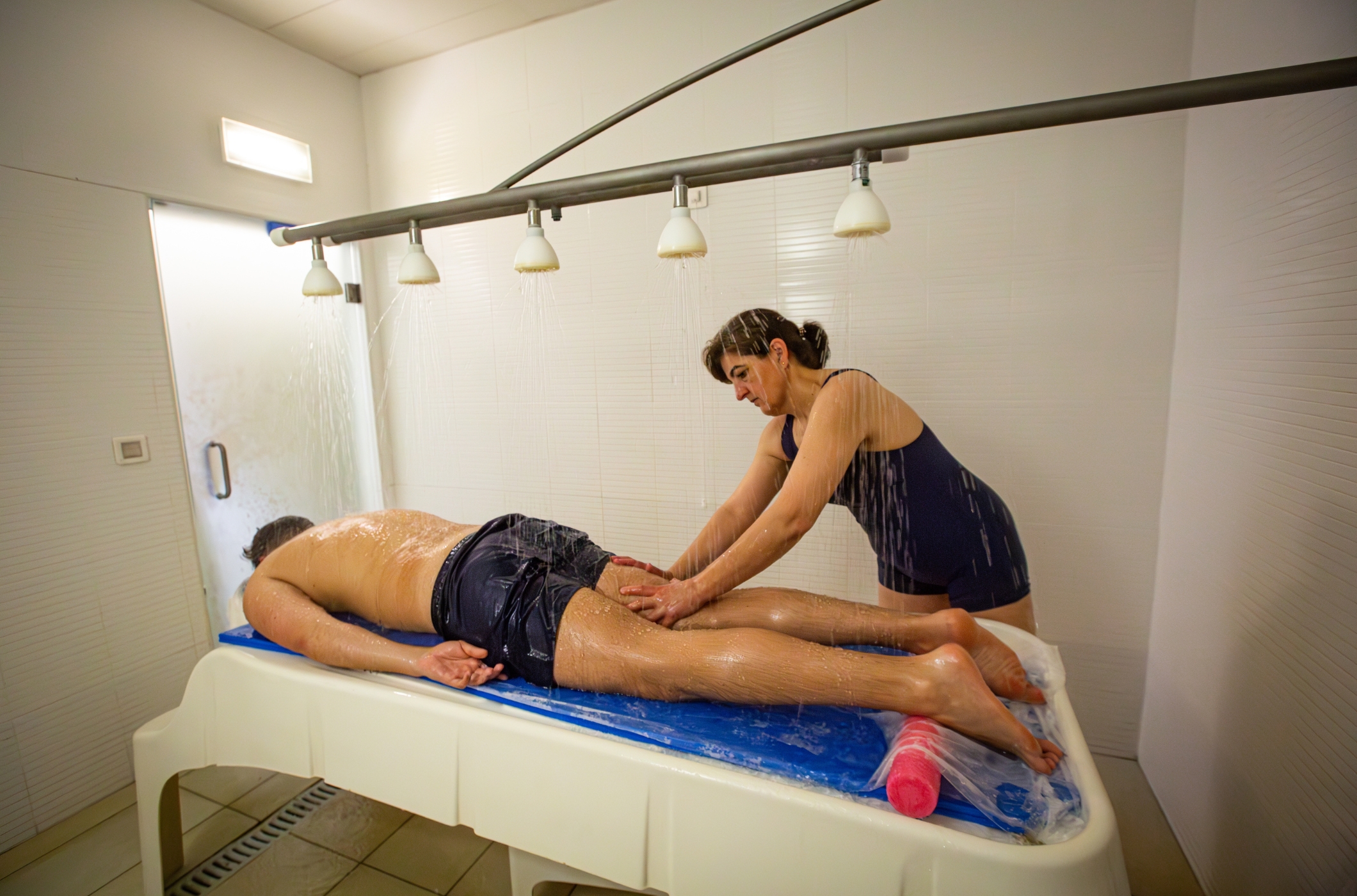
Thermal treatment is based on the use of warm, hypermineralised mineral-medicinal thermal waters, such as those found at Termas de Chaves. These waters are particularly suitable for muscular conditions due to their relaxing, analgesic and anti-inflammatory properties.
The effectiveness of the treatment increases when thermal therapy is combined with Physical and Rehabilitation Medicine techniques, helping to achieve faster and longer-lasting results.
How does thermal treatment act on muscle contractures?
Thermal treatment for muscle contractures generally uses water at temperatures between 34°C and 38°C, promoting deep muscle relaxation.
The heat of the thermal water causes:
- Relaxation of the muscle fibres, reducing accumulated tension;
- Vasodilation, increasing local blood flow;
- An increased supply of oxygen and nutrients to the affected muscle;
- More effective elimination of toxins associated with muscle fatigue.
Hydrotherapy also allows movements and exercises to be performed more safely, with less impact and resistance, facilitating functional recovery.
Benefits of thermal treatment for muscle contractures
Thermal treatment provides multiple benefits in relieving and preventing muscle contractures, including:
- Reduced muscle pain and stiffness;
- Deep muscle relaxation;
- Improved mobility and flexibility;
- Reduced physical and mental tension;
- Reduced reliance on analgesic medication and muscle relaxants;
- A general feeling of well-being and comfort.
Hyperthermal, bicarbonate-rich and hypermineralised thermal waters, such as those at Termas de Chaves, are effective in reducing inflammation and supporting muscle recovery.
Scientific evidence and effectiveness of thermal treatment
Several scientific studies demonstrate the effectiveness of thermal therapy in the treatment of muscular conditions, particularly in cases of chronic or recurrent pain.
Thermal treatment provides significant benefits in reducing pain, improving muscle function and decreasing the frequency of contractures, especially when undertaken regularly and incorporated into an individualised therapeutic plan.
Results may vary from person to person, depending on the cause, intensity and duration of the contractures, as well as the characteristics of the thermal water and the techniques applied.
What should I know before starting treatment?
Before beginning thermal treatment, it is essential to undergo a medical assessment with a medical hydrologist.
Following an assessment during the consultation, the medical hydrologist will develop a thermal treatment plan that can be combined with other therapeutic options in order to maximise the effectiveness of the different types of therapy.
Thermal treatment should be regarded as a complement to regular medical care.
It is also important to note that thermal treatments are partially covered by the Portuguese National Health Service and by several healthcare subsystems, including ADSE and SAMS.
Advantages of thermal treatment compared with other approaches
Compared with other therapeutic options, thermal treatment offers several advantages:
- Natural and non-invasive techniques;
- Excellent tolerance among most patients;
- A lower risk of side effects;
- Long-lasting benefits when undertaken regularly;
- An overall improvement in quality of life.
Article originally published in Health and Well-Being - www.saudebemestar.pt and written in partnership with Termas de Chaves.